Introduction
This is a blog about all the things that bug me. It will contain my own opinions about a range of subjects and I'll update it when I think of something new to add. The views expressed are entirely my own and on the whole are not meant to offend.
Text Services for Mobiles
I could not believe this when I saw it. There's an advert for two mobile services, which cost £1.50 to subscribe to. Nothing bad about that you might think, I mean, if you want to get wallpapers, games or the latest ring tones, then that's how you get them. The problem I have about the services is what they provide. The first one is a baby's names. Yes, subscribe to this service and get a text back with a baby's name; ideal if you're expecting or just trying it for fun, as the advert states. Now if I wanted to find a name for my new baby to be, I would not rely on a random name sent to my mobile. I would check a book of baby names, or choose it according to a family member, uncle, aunt, friend, etc. It may be a modern age, but choosing a name is fairly important.
The second service in the advert (shown on the usual channels, i.e. TMF, The Hits, etc.) is one to get the initial of the man you're going to marry. So it's geared towards women who think a phone company can predict who they are going to meet, fall in love with and marry. Now they're not giving you his name, just his initial. So you're paying £1.50 a week to get a text message of one character. These services send messages automatically, probably from a computer program, so I'm guessing this complex program picks a random letter of the alphabet and then texts it. What a great way to use technology; get women to subscribe to a service that sends them a random letter from the alphabet, that probably doesn't check to see if the letter has already been sent, or worries if the letter is something like an 'x'. The company would probably argue that the repeat letters could be sent because it might predict the name to be Ben one week, then Brian the next, but come on, this is just a joke, right?
Misspelt Words In Song Titles
Song titles shouldn't really matter about how they are spelt, as you're main concern is the music you're listening to. Artists don't seem to follow this logic, and use letter or misspelt words in their song titles. Prince seems to favour this trend, with at least five tracks, Feel U Up, Money Don't Matter 2 Nite, I Would Die 4 You, U Got The Look and The One U Wanna C to name but a few. I like the songs, I just find it irritating that the titles are misspelt. There are several other artists, like Cassie - Me & U, Pink! - U + Ur Hand, The Ordinary Boys - I Luv U, The Pussycat Dolls - Buttonz, Joe - Ride Wit U, Tiga - Hot In Herre and The Beatmasters - Rok Da House. It's not as if they are trying to save space when printing the titles on the covers, or there is a severe limit of the number of characters to use when naming files to download to your iPod/mp3 player. Be dangerous, and run a spell checker on your lyrics or cover designs before they are printed.
Television Listings (TBA)
I get a paper on Saturday and it always includes a colour supplement with television listings for the week. It includes a list of the films (or rather, the best films), a day by day guide for the terrestial and digital channels (although you have to search for some of the channels) and a digital film guide listed by time. This means you have to search for the channel in all the films listed, which is difficult if you have Freeview, as the only channel you are looking for is Film 4. It also presumes that all films start in the evening, when Film 4 starts at 1:00pm (but the films are never shown in the listings). What gets me is that one programme appears several times on the Saturday schedule one week ahead, namely To Be Announced. Just this week it appeared fifteen times across BBC 1, BBC 2, ITV 1 and Channel Four (though never on Five). It's either a programme or a film, and appeared five times on one channel, counting for all of the films that day.
At Christmas time all the papers have their TV Guides for the holiday period, and they try to be the first one out, but they too have the To Be Announced programme appearing many, many times. Now the whole point of the paper/colour supplement is to tell you, the reader, what programmes are on. If they don't know what is going to be on then it's listed as To Be Announced. The more times you don't know what programme is going to be on, the less helpful the listings will be. the guides At Christmas I can allow to be a little unsure of what will be on, as the television channels are trying to find the best programmes/times show you watch their channel. If you have a TBA (as I will call it from now on) appearing a couple of times each day, they you shouldn't bother with the guide until you can reduce this number. With the weekly guide, it runs from Saturday (the day the paper arrives) to the following Saturday, and the TBAs only appear on this Saturday. If they can't tell you what is on in a week's time they don't bother to tell us. Have the guide run from Saturday to Friday instead.
I subscribe to a television listing service on my PC called DigiGuide, which gives be all the listings for channels that I want, and updates itself when I go on line. Looking through the listings, it's only twelve days ahead that TBAs start to appear, and only 21 days ahead do you get a No Programmes Listings message. Now I don't know where the software gets it's listings info from, but it's obviously more accurate than where the newspapers get their listings from.
Doctor Who DVDs
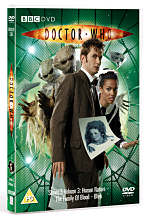 Since the Doctor Who series has come back the BBC
have done a lot to promote it. There are many items you can buy, like key rings, cookie jars (I have a Dalek one), even a USB port
in the shape of the Tardis (that makes the materialisation sound when you plug something in). The BBC web site has plenty of
information and wallpapers, and there's been web episodes (like the one with Richard E Grant as the Doctor). On television you have
the episodes, followed by the making of the episode on BBC Three (Doctor Who Confidential) and an alternative cast commentary
using the extra channels on Freeview. So what's the problem you ask? Well, when the series gets released on DVD, it's done in volumes,
a while after the episodes have been first shown on television. Series 3 has twelves episodes, and volume 3 has just been released,
for £17.99. It contains the double bill episodes where the Doctor has become the human John Smith, a teacher in 1913 (Human Nature, The
Family Of Blood) and Blink, the one where the Doctor only really appears as a DVD Easter Egg. There are no extras at all in these
releases, which will cost you nearly £72 to get the complete set when the fourth volume comes out in August. The alternative is to
wait until the box set comes out, which will included the commentaries, the Confidential programmes, maybe even The Infinite Quest
cartoon that featured on the Totally Doctor Who children's series. This box set will probably cost less than buying all the
discs together, going by the prices of the previous series.
Since the Doctor Who series has come back the BBC
have done a lot to promote it. There are many items you can buy, like key rings, cookie jars (I have a Dalek one), even a USB port
in the shape of the Tardis (that makes the materialisation sound when you plug something in). The BBC web site has plenty of
information and wallpapers, and there's been web episodes (like the one with Richard E Grant as the Doctor). On television you have
the episodes, followed by the making of the episode on BBC Three (Doctor Who Confidential) and an alternative cast commentary
using the extra channels on Freeview. So what's the problem you ask? Well, when the series gets released on DVD, it's done in volumes,
a while after the episodes have been first shown on television. Series 3 has twelves episodes, and volume 3 has just been released,
for £17.99. It contains the double bill episodes where the Doctor has become the human John Smith, a teacher in 1913 (Human Nature, The
Family Of Blood) and Blink, the one where the Doctor only really appears as a DVD Easter Egg. There are no extras at all in these
releases, which will cost you nearly £72 to get the complete set when the fourth volume comes out in August. The alternative is to
wait until the box set comes out, which will included the commentaries, the Confidential programmes, maybe even The Infinite Quest
cartoon that featured on the Totally Doctor Who children's series. This box set will probably cost less than buying all the
discs together, going by the prices of the previous series.
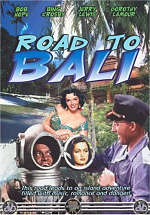
Why do they release the series in parts, wait a while, then release it all together with all the bells and whistles of a normal DVD release? Other manufacturers do this as well, with a normal release of a film, then a special two disc collector's/director's/anniversary edition. Over the years I've come to expect film companies to re-release films, just take a look at any site for something like Bob Hope and Bing Crosby's Road to Bali; you'll find at least seven different releases, and I don't think they keep finding new material to add to the disc. The BBC ought to know better, they've been slowly releasing the 'classic' Doctor Who series on VHS for ages, and then started again on DVD, with another release based on the actor playing the Doctor. Either release the entire series at once on separate discs but with extras or just the entire series in a box set. Don't release the series in dribs and drabs with nothing extra, as you know fans will want the extras. All they're doing is encouraging people to tape (or should that just be record, with a DVD recorder?) it when it's transmitted. With DVD authoring software and a DVD burner I could easily make a DVD set with the episodes, confidential programmes, cast commentaries and any specials shown on TV if I recorded them all.
Films On DVD
What this really should be called is the lack of some films on DVD. There are some films that I remember going to the cinema to see, and then even buying the soundtrack album, but I cannot get them on DVD. Electric Dreams was released in 1984 and was the story of a boy meets a girl but his computer gets jealous. It starred Lenny Von Dohlen, Virginia Madsen, Maxwell Caufield and the voice of Bud Cort, and had a great soundtrack with Phil Oakey, Jeff Lynne, Giorgio Moroder and Culture Club, and although you can get the soundtrack on CD, the film is not available.
 I'm not alone in this, as it is mentioned in the August 2007 issue of
DVD Review (page 27). Some stuff that was available on DVD has been deleted, but it's not really old stuff. The Sci-Fi show Lexx
was a cult hit in the UK, and I got the movies and first part of the series on DVD when it first came out. But box sets were expensive, so
I waited a while before trying to get the rest of the series. DVD sites still list the DVDs, but they are marked as deleted in 2003. However,
if you search on any American site, the discs are still available. I have a multi-region DVD player, so I could get them on a Region 1 disc,
but I would prefer to get a UK Region 2 disc. I could also search on eBay or second hand sites, but I want a new disc. It's taken until
September this year for the original version of Blade Runner (the one with the commentary and happy ending) to finally come out on
DVD and if you want Alfred Hitchcock's Dial M for Murder, you can only get a Region 1 version. If you want old television series like
Father Dear Father, Follyfoot or Doctor In Charge that's no problem, but older films, no chance.
I'm not alone in this, as it is mentioned in the August 2007 issue of
DVD Review (page 27). Some stuff that was available on DVD has been deleted, but it's not really old stuff. The Sci-Fi show Lexx
was a cult hit in the UK, and I got the movies and first part of the series on DVD when it first came out. But box sets were expensive, so
I waited a while before trying to get the rest of the series. DVD sites still list the DVDs, but they are marked as deleted in 2003. However,
if you search on any American site, the discs are still available. I have a multi-region DVD player, so I could get them on a Region 1 disc,
but I would prefer to get a UK Region 2 disc. I could also search on eBay or second hand sites, but I want a new disc. It's taken until
September this year for the original version of Blade Runner (the one with the commentary and happy ending) to finally come out on
DVD and if you want Alfred Hitchcock's Dial M for Murder, you can only get a Region 1 version. If you want old television series like
Father Dear Father, Follyfoot or Doctor In Charge that's no problem, but older films, no chance.
Unoriginal Songs
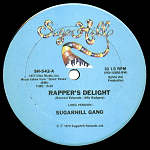 When I was growing up, most of the music that I listened to was
original. The only song that had part of another one was the Sugarhill Gang's classic Rapper's Delight, which had rapping over a
loop of Good Times. Nowadays artists think it's clever to take long chunks of other songs, add some drumbeats on top and sing/rap
on top of that. I could cite several hip hop tracks that use this effect, but even people like George Michael do it. On the album Patience,
the track Flawless (Go To The City) is George singing over the original track Flawless by the Ones.
When I was growing up, most of the music that I listened to was
original. The only song that had part of another one was the Sugarhill Gang's classic Rapper's Delight, which had rapping over a
loop of Good Times. Nowadays artists think it's clever to take long chunks of other songs, add some drumbeats on top and sing/rap
on top of that. I could cite several hip hop tracks that use this effect, but even people like George Michael do it. On the album Patience,
the track Flawless (Go To The City) is George singing over the original track Flawless by the Ones.
Eric Prydz is another artist that reconstructs a track with odd synth sounds on a sample. How would his track Proper Education sound if it didn't have long samples of Pink Floyd's Another Brick In The Wall (Part 2)? His previous track Call On Me was very popular (mainly due to the video) but at least he managed to get Steve Winwood to re-record the samples originally used in his song Valerie (re-sung as Call On Me). Jamelia's Beware Of The Dog should just be called Personal Jesus with new vocals, and I'm sure Depeche Mode weren't that happy about the song. Now Gwen Stefani was quite innovative with her track Wind It Up, but the Sound Of Music (Lonely Goatherd) doesn't really fit with a hip and trend style, does it?
Cover versions should only be done as tribute to the original artist, or if the new version adds something to the track. Soft Cell's version of Tainted Love was very different to the original version by Gloria Jones in 1964 and so was Marilyn Manson's, but Girl's Aloud's versions of I Think We're Alone Now, or Jump or Walk This Way just don't do anything for the tracks. My niece thought that the track The Tide Is High by Atomic Kitten was originally by them. Then she heard the original by Blondie. I'm not fussed about remixes of tracks. Kylie Minogue's Can't Get You Out Of My Head was remixed with New Order's Blue Monday, and even featured in her concerts, and some of the mashed up tracks on the TV music channels are very well done, especially as they are using the videos as well as the music, but if I hear another song like Hall & Oates' Out Of Touch filtered and tweaked with new drum beats over it (as done by United Nations) I don't know what I'll do!
The Hits/TMF
 When I first got my Freeview box I watched The Hits and TMF for quite a while, as
the only music programmes I had before were Top of the Pops and The Chart Show. After getting over the fact that I could see
the end of a music video (as it was always cut short when they were shown on regular TV) I soon got fed up of the extra logos that appeared
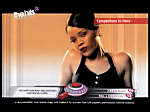
over the videos. The caption used to name the artist and track you are watching used to be unobtrusive, but now on TMF the graphic takes up
a lot of room, and covers the video you're trying to watch for quite some time. The special logos for their top 50 whatever lists also take
up room, and then they have the ridiculous matching games. These graphics matching names or something equally daft according to people phoning
in usually take up the bottom quarter of the screen.
When I first got my Freeview box I watched The Hits and TMF for quite a while, as
the only music programmes I had before were Top of the Pops and The Chart Show. After getting over the fact that I could see
the end of a music video (as it was always cut short when they were shown on regular TV) I soon got fed up of the extra logos that appeared
over the videos. The caption used to name the artist and track you are watching used to be unobtrusive, but now on TMF the graphic takes up
a lot of room, and covers the video you're trying to watch for quite some time. The special logos for their top 50 whatever lists also take
up room, and then they have the ridiculous matching games. These graphics matching names or something equally daft according to people phoning
in usually take up the bottom quarter of the screen.
 TMF have either been running out of videos or something as there are more
programmes shown on the channel, like Punk'd (why replace the one missing letter e with an apostrophe?), Date My Mom (I though it was
spelt Mum), Drawn Together (violence and swearing with cartoons characters living in a house like in a reality show) and The Wonder
Years (an old favourite of mine). On a Friday they have a movie, and change the TMF logo to TFM (The Friday Movie) but the film is often
shown on the Thursday before as well as a Friday.
TMF have either been running out of videos or something as there are more
programmes shown on the channel, like Punk'd (why replace the one missing letter e with an apostrophe?), Date My Mom (I though it was
spelt Mum), Drawn Together (violence and swearing with cartoons characters living in a house like in a reality show) and The Wonder
Years (an old favourite of mine). On a Friday they have a movie, and change the TMF logo to TFM (The Friday Movie) but the film is often
shown on the Thursday before as well as a Friday.
Advertising Channels You Cannot Watch
With Freeview, you can watch many more channels than the regular five terrestial, without paying for cable or satellite. The only problem with this is that the original makers of the channels obviously think the only people watching them are cable/satellite viewers, and advertise the other channels. Adverts for original Simpsons episodes on Sky One (Channel Four may have the rights, but the episode they show are really old), and series premieres on UK Gold are the current ones. Freeview only has Sky Three, Sky News and Sky Sports News, and UK Bright Ideas so you can't get the other channels. If your Freeview box is compatible you can get Top Up TV, which pays for some extra channels using a decoder card, but even if you get UK Gold, it's not on all the time, as with cable/satellite.
Adverts for the Disney channel regularly appear on abc 1, but even though you can't get the Disney Channels on Freeview, there are still problems with the channel itself. Most of the programmes on abc 1 are American comedy, like Rodney, 8 Simple Rules, Hope & Faith, Scrubs, Home Improvement and Less Than Perfect. They recently got the rights to The Ghost Whisperer, but don't show the programme until ten in the evening. On Freeview, abc 1 stops at six in the evening, as there isn't enough bandwidth at the moment to show it all day. This is due to the terrestial channels taking up space, so when the analogue signal goes there will be more room for channels and abc 1 may be on longer. Now I'm sure the channel knows that it is not on Freeview at ten, but you still get the adverts for the show, which with it's contents will never be shown before six.
Sports Coverage on Television
As you watch sports programmes on any commercial channel, i.e. ITV, Channel Four, Five, etc. you will obviously have a commercial break at some point. If the sports event you are watching is not live, you can be sure that they will pick up were the action was when you left, but if it is live, then you will have to watch a replay. The most notable time this happened was when ITV was showing the F1 Grand Prix, and they went to a commercial break when there was only a few laps left. When it came back we the viewer missed the last few laps of the race, which in that particular race were quite good. ITV seem to have learnt their lesson and won't go to a break when there a few laps left, but if there is a delay in the race, or a safety car situation in the beginning, they will go to a break. Of course this didn't happen when the BBC showed the races, but in this financially based world when the option to pick it up again came, ITV bid more to get the rights. This has also just happened with Neighbours, made immensely popular on BBC 1, going to Five. The Simpsons was a BBC 2 favourite, but again the rights were lost to Channel Four, who could afford to pay more for the programme.
 The BBC aren't always the best players in the sports game, especially
when Wimbledon was on. Regular programmes (ironically, including Neighbours, which they still have until next year) are cancelled so
we (the viewer) can have hours of uninterrupted coverage, barring any rain, in which case we get repeats of old matches. A few years ago
programmes were transferred to BBC 2 for the time Wimbledon was on, but the BBC wanted to give us so much of the tennis championships that
BBC 2 had the coverage as well. On digital the extra channels were used to give even more coverage. These channels start around number 301,
and are used for festivals (to show other acts on different stages) or when Doctor Who was shown on BBC 1, a commentary track with the
cast. If you're not a tennis fan, you just have to learn not watch the BBC, but even that didn't help, as ITV decided to show the film
Wimbledon during the week. It wasn't that bad as the film is very good (and certainly more interesting than the actual coverage on BBC).
You can tell I'm not a real tennis fan, can't you?
The BBC aren't always the best players in the sports game, especially
when Wimbledon was on. Regular programmes (ironically, including Neighbours, which they still have until next year) are cancelled so
we (the viewer) can have hours of uninterrupted coverage, barring any rain, in which case we get repeats of old matches. A few years ago
programmes were transferred to BBC 2 for the time Wimbledon was on, but the BBC wanted to give us so much of the tennis championships that
BBC 2 had the coverage as well. On digital the extra channels were used to give even more coverage. These channels start around number 301,
and are used for festivals (to show other acts on different stages) or when Doctor Who was shown on BBC 1, a commentary track with the
cast. If you're not a tennis fan, you just have to learn not watch the BBC, but even that didn't help, as ITV decided to show the film
Wimbledon during the week. It wasn't that bad as the film is very good (and certainly more interesting than the actual coverage on BBC).
You can tell I'm not a real tennis fan, can't you?
Click on News 24
 This is a rather specific bug relating to one programme, Click. This is
a technology programme with a heavy slant towards the PC, shown on News 24. With the absence of the old favourite Tomorrow's World, and
The Gadget Show on hiatus, this is one of the only programmes to find out about the news in the PC world, with reports on the big
technology exhibitions, PC news and web sites. The problem with the show is that it is first aired on a Saturday and is usually listed for
11:30. You always get the news headlines and weather before then, so the show (which is 25 minutes long) started at 11:35. Now if there is
some ground breaking news happening, then the programme is casually forgotten and you have to wait for one of the repeats that weekend, or
watch it on line. It gets worse though. Sometimes the programme is shortened to only half the time or even stopped when some 'newsworthy' item
happens. I say that in inverted commas, because the shortened program was due to Gordon Brown talking about something that could easily have
waited twenty minutes, and the time the programme was interrupted it was not a groundbreaking news item. Seeing as the BBC doesn't have a
technology programme on the terrestial channels, why isn't the programme shown on BBC 1 or BBC 2? Of course, on a Saturday it's too busy
showing us cookery programmes or sport, so that's not going to happen on a Saturday morning.
This is a rather specific bug relating to one programme, Click. This is
a technology programme with a heavy slant towards the PC, shown on News 24. With the absence of the old favourite Tomorrow's World, and
The Gadget Show on hiatus, this is one of the only programmes to find out about the news in the PC world, with reports on the big
technology exhibitions, PC news and web sites. The problem with the show is that it is first aired on a Saturday and is usually listed for
11:30. You always get the news headlines and weather before then, so the show (which is 25 minutes long) started at 11:35. Now if there is
some ground breaking news happening, then the programme is casually forgotten and you have to wait for one of the repeats that weekend, or
watch it on line. It gets worse though. Sometimes the programme is shortened to only half the time or even stopped when some 'newsworthy' item
happens. I say that in inverted commas, because the shortened program was due to Gordon Brown talking about something that could easily have
waited twenty minutes, and the time the programme was interrupted it was not a groundbreaking news item. Seeing as the BBC doesn't have a
technology programme on the terrestial channels, why isn't the programme shown on BBC 1 or BBC 2? Of course, on a Saturday it's too busy
showing us cookery programmes or sport, so that's not going to happen on a Saturday morning.